E-E-A-T explained: what it means for small websites
E-E-A-T is not a score, a plugin or a box to tick. It is how Google describes the kind of content it wants to rank. Here is what each letter means in practice, and the cheap, honest ways a small site can show it.
Somewhere around 2019, "E-A-T" started appearing in every SEO article, usually next to advice like "add an author bio and your rankings will improve". In late 2022 Google added another E, for Experience, and the advice got louder. Most of it misses the point.
E-E-A-T isn't a number Google calculates for your site. It's a concept from the guidelines Google gives to its search quality raters, the people who evaluate results so Google can check whether its systems are working. Understanding it helps because it describes what Google's ranking systems are trying to reward. Here's what it means for a small business or a personal blog.
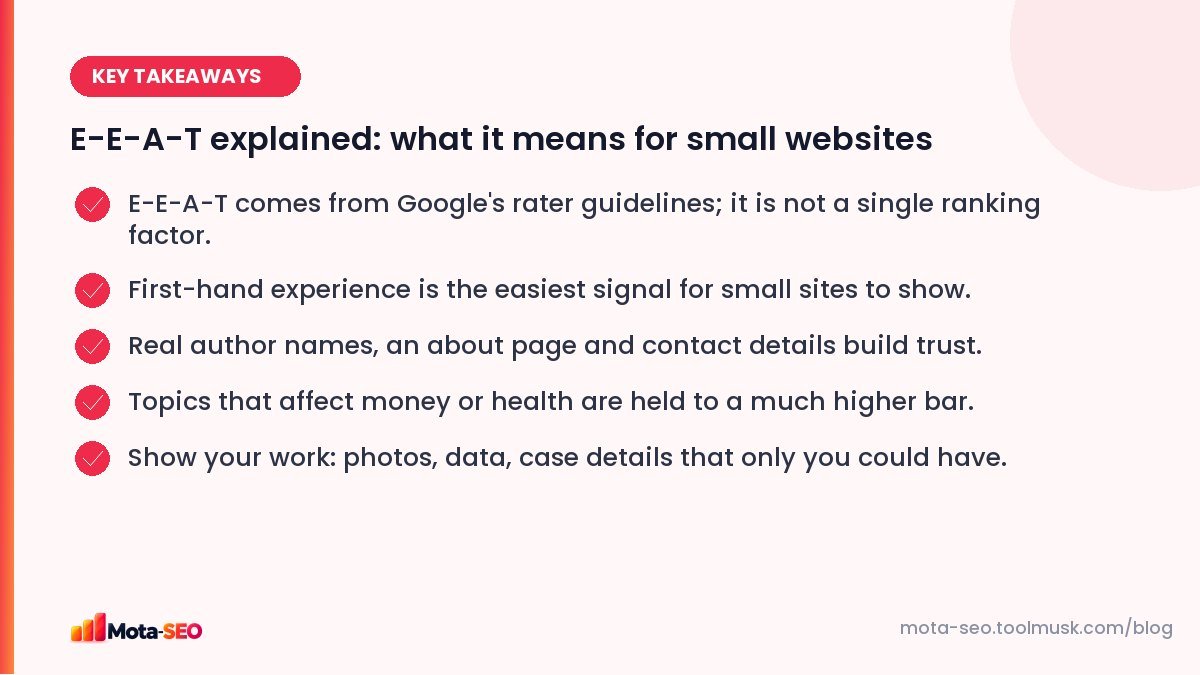
Key takeaways from this guide
The four letters, in plain words
| Letter | The question behind it | Example of showing it |
|---|---|---|
| Experience | Has the writer actually done or used the thing? | A review with your own photos of the product, a guide that mentions what went wrong when you tried it. |
| Expertise | Does the writer know the subject well? | A tax article by a practising chartered accountant; accurate, specific detail. |
| Authoritativeness | Is the site or person a known source on this topic? | Other sites in the field link to you or quote you. |
| Trust | Can people rely on this page and this business? | Clear contact details, honest claims, secure checkout, accurate information. |
Google's rater guidelines call Trust the most important of the four. The others feed into it: a page can be written by an expert and still be untrustworthy if, say, it's selling something with fake reviews.
Why it matters more for some topics
The guidelines use the term "Your Money or Your Life" (YMYL) for topics that could affect someone's health, finances, safety or major decisions. Medical advice, investment tips, legal questions, loan comparisons. For these, the bar is much higher: Google wants to see real expertise and strong trust signals before it ranks a page.
A recipe blog and a blog about diabetes medication are judged very differently. If you write about YMYL topics, author credentials and sources aren't decoration; they're the minimum.
What small sites can actually do
Big brands get authority from years of press coverage. You can't buy that, but you have something they often lack: first-hand experience. Here's how to make it visible.
1. Write from what you've done
Compare two sentences about choosing a hosting plan:
- "Shared hosting can be slow for high-traffic websites."
- "When one of our client sites crossed about 40,000 visits a month on a ₹149 shared plan, the server response time went from 300 ms to over 2 seconds during the evening peak, and moving to a small VPS fixed it."
The second is more useful, more believable, and impossible to copy without the experience. Put specifics like that everywhere you can: numbers, names of places, what you'd do differently.
2. Use your own images
Stock photos say nothing about you. A photo of your workshop, your team at a site visit, a screenshot from your own dashboard: these are small proofs of experience. Give them descriptive alt text too (our alt text guide shows how).
3. Put real people's names on the content
An article "by Admin" tells readers nothing. Use the actual writer's name, a short line about why they know the subject, and link to an author page with more detail. If a qualified person reviewed the piece, say so.
4. Make the business easy to verify
- An About page that says who you are, where you are and how long you've been doing this.
- A Contact page with a real address and phone number for a local business.
- Matching details on your Google Business Profile and other listings.
- Clear policies: refunds, privacy, terms. Boring, but they matter for trust.
5. Cite sources and stay accurate
When you quote a statistic, link to where it came from. When something changes (a tax rate, a Google feature), update the article and say when you did. Outdated advice quietly erodes trust.
6. Earn mentions from your field
Authority comes from others. Speak at a local event, contribute data to an industry report, answer questions in the communities your customers use. Links and mentions from relevant sites are the strongest signal that you're a known source.
Things that don't work
- Fake authors. Invented names with AI-generated headshots are easy to spot and destroy trust when found.
- Badge walls. "As seen on" logos for places that never featured you.
- Author schema with nothing behind it. Markup describes what's on the page; it can't create expertise that isn't there.
- Bios stuffed with keywords. Write them for people.
A quick E-E-A-T check for any page
- Would a reader know who wrote this and why they're qualified?
- Is there at least one detail that only someone with real experience would know?
- Are claims backed by a source or by your own data?
- Can a visitor easily find who runs the site and how to reach them?
- Is the information current?
If you answer "no" to two or more, that page has an E-E-A-T problem, regardless of how well it's optimised otherwise. The fix is rarely technical; it's writing more honestly about what you know.
Frequently asked questions
Is E-E-A-T a ranking factor?
Not a single one. Google has said E-E-A-T is not a specific ranking factor, but its systems use many signals that line up with it, such as links, reputation and content quality, to find helpful, reliable pages.
Do I need author bios on every blog post?
They help readers and are worth adding, especially on topics about health, money or law. A short line about the writer's experience plus a link to a fuller author page is enough.
Can a new website have good E-E-A-T?
Yes. Authority takes time, but experience and trust can be shown from day one with original content, real names, clear contact details and accurate information.
What is YMYL?
Your Money or Your Life: topics that can affect health, finances, safety or important decisions. Google holds pages on these topics to a higher standard of expertise and trust.

Written by the Mota-SEO team
We build free SEO and website tools. Our guides are practical, written for small teams, and checked against Google's own documentation.
Comments 0